Address

Tomball , Texas, 77375

Work hours

Monday- Saturday 9 AM- 5 PM

call us today

832-454-1378

FAQ’s

Yes. This installation system has been the standard in Europe for decades. As long as the installation follows the guide, the entire system remains perfectly watertight.
Additionally, European windows feature an internal drainage system that prevents water from entering, even without flanges.

Will installing without flanges guarantee tightness and prevent water intrusion?

Yes. This installation system has been the standard in Europe for decades. As long as the installation follows the guide, the entire system remains perfectly watertight.
Additionally, European windows feature an internal drainage system that prevents water from entering, even without flanges.

Flangeless installation typically takes about 1.5 times longer than the standard “nailing fin” method.
Expect the first few windows to take longer (up to 2-3x), but the pace picks up significantly once your crew adapts.
You trade speed for precision: this method gives you full control over leveling and sealing tightness, ensuring a high-quality install regardless of framing imperfections.

Every window set includes hardware, handles, and strap anchors. You need to provide the tools yourself, as well as installation materials like screws, foam, and sealing tapes.

If you haven’t worked with European windows before, be aware that they are heavier than U.S. windows. Large units in particular may require additional lifting equipment. You can find the exact weight of each window in the technical specifications on your invoice.

Yes, you can order windows with nailing flanges. However, keep in mind that these products are 13% to 34% more expensive than standard models.

Share this article

Discover the real uPVC windows price for professionals. We offer proven systems from Germany and Polish manufacturers. Get your personalized quote online – for free and you will be surprised with lower price for most efficient windows.

Pricing shown is for reference only and subject to market fluctuations. For current, project-specific pricing, schedule your free quote. 

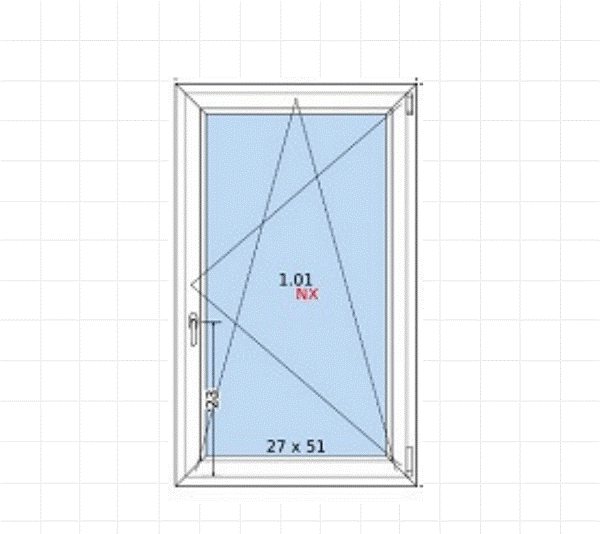
Tilt and turn uPVC window 35.4 in x 59 in (90 x 150 cm)

Aluminum vs uPVC windows – what are the differences

European uPVC windows changes that assumption and can even replace aluminum in some cases. However, choosing uPVC or aluminum blindly still has hidden traps that will instantly eat into your profit.

Below, we show where to use uPVC, where to pay extra for aluminum, and how to build a hybrid window set that protects your profit without limiting the premium look.

Yes, they are. At AMRO Windows  we offer windows that meet NFRC standards. Please consult with us to confirm the compliance of the window parameters with the requirements.

Yes, we do. Our warranty is valid across all states in the US.

In the U.S., “vinyl” usually means cheap windows. Builder-grade. Thin frames. Weak look. Not something you want in a premium spec home. That belief is fair only for standard American vinyl.

European uPVC is a different product. It is built for higher performance, tighter tolerances, and better long-term stability.

The short answer is yes. European uPVC profiles typically use thicker profile walls, steel reinforcement, and better sealing systems. That helps reduce the bending, warping, and soft-frame feel common with lower-grade vinyl windows. It’s more like fiberglass.

When I explain this to clients, I tell them not to compare vinyl with uPVC. It is a different class.

The easiest way to think about it: put vinyl, uPVC, and fiberglass on one table, and uPVC will feel much closer to fiberglass.

Outside the true luxury segment, aluminum on every opening can kill the window budget.

European uPVC gives you a smarter option: strong performance, a clean modern look, and more profit than a full aluminum package. The cost gap is real.

A U.S. triple-pane window with around 0.30 U-factor often costs $766–$900 per unit.

A high-spec European uPVC window can reach even around 0.14 U-factor for about $431–$651 per unit.

So you can get close to Passive House-level performance without paying top-tier U.S. window prices.

And with alu-look profiles, uPVC can also imitate aluminum (more on that later in this article) . Use uPVC where performance and profit matter. Use aluminum where oversized glass, slim frames, or the main elevation help sell the house.

Use European uPVC when…

  • You need a low U-factor at affordable price
  • You want best quality on standard windows nu cutting duty cost
  • You want an alu-look finish without aluminum pricing
  • You do not need slim frames or large glasses


Do not use uPVC when…

  • You need frameless glasses
  • You need oversized sliding patio doors
  • Dark frames will sit in heavy sun